
3D Printing 101
Updated: Oct 2
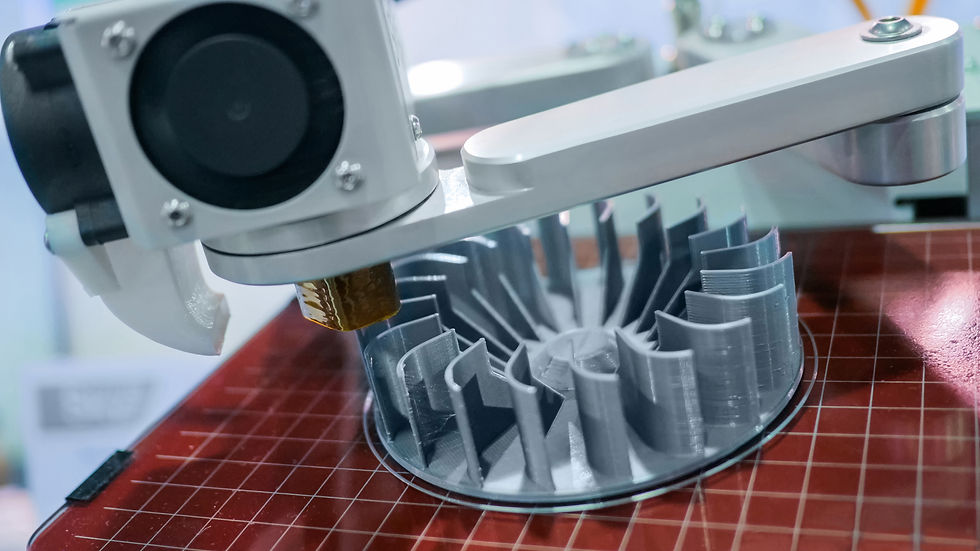
How a Digital Idea Becomes a Physical Part
What Is 3D Printing?
3D printing is a manufacturing process that builds a physical object from a digital 3D model.
Instead of cutting a component out of a larger block of material, many 3D printing processes build the object layer by layer. This makes it possible to manufacture complex shapes, custom components and low-volume parts without conventional moulds or tooling.
It Starts With a 3D Model
Every print begins with a digital model. That model can be designed from scratch, created from measurements or developed from a 3D scan of an existing object.
The quality of the model matters. Wall thickness, clearances, orientation, mounting features and the intended material all need to be considered before manufacturing begins.
Preparing the Model for Printing
Before a printer can manufacture the object, specialised software converts the 3D model into instructions for the machine.
This stage determines factors such as layer height, internal structure, wall thickness, support material and printing temperatures. These settings affect strength, surface quality, accuracy and production time.
Prototype Before the Final Part
One of the major advantages of 3D printing is the ability to test an idea quickly.
A prototype can be produced to check dimensions, fit and functionality. If something needs to change, the digital model can be adjusted before producing the next version. This can be especially valuable for custom parts and components that need to fit existing equipment.
From One Part to Repeat Production
3D printing is useful for more than prototypes. Once a design has been tested, the same digital file can be used to reproduce additional parts consistently.
This makes the process useful for custom manufacturing, replacement components, product development and smaller production quantities where conventional manufacturing may not be practical.
How Greenstone Can Help
Greenstone combines 3D scanning, digital modelling and 3D printing to help businesses, professionals and individuals turn physical objects and ideas into practical solutions.
Whether the starting point is a broken component, an existing object or a new concept, the goal is the same: create a part that is designed for its intended purpose.


Comments